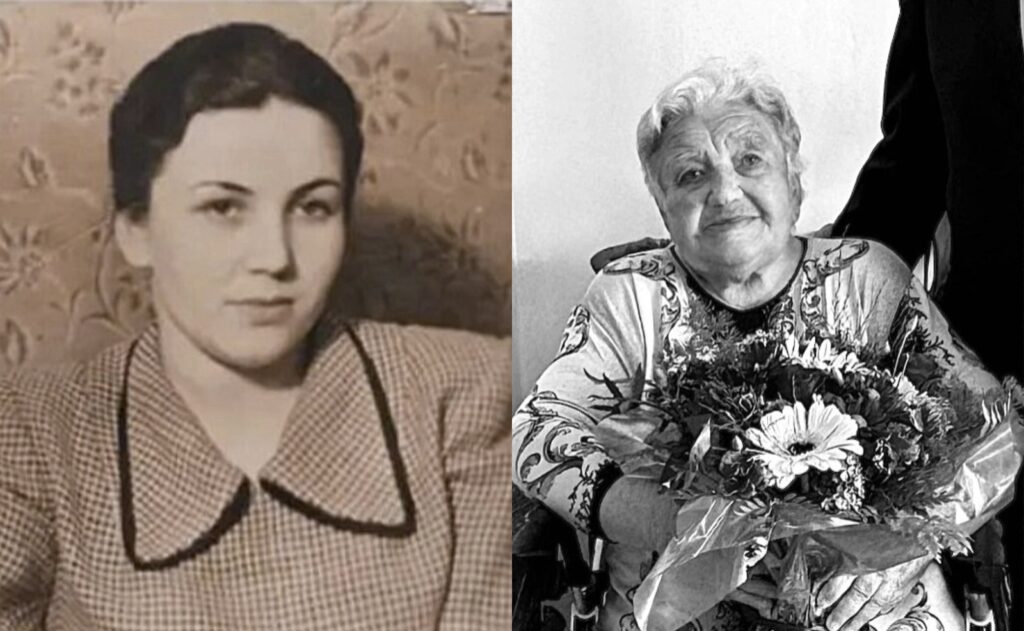
A survivor of the Siege of Leningrad, Galina Borisovna Matskina, has died at the age of 98, bringing to a close the life of a woman whose story reflected extraordinary resilience during one of history’s most devastating wartime sieges.
Galina passed away on April 6, according to an announcement by the Russian Embassy, which described her as “a person of extraordinary strength of spirit”.
She was just 14 years old when war reached Leningrad—now known as Saint Petersburg—and the city was plunged into one of the most brutal blockades of World War II.

In a recorded account of her experiences, later shared with her grandchildren and local media, she described the severe conditions endured during the siege:
“The winter was extremely harsh – there was no firewood and no food.
“There was no electricity, and the water supply and sewage systems were not working. We kept our coats on indoors.
“There were constant shellings, bombing raids, and constant stress.”
Amid deteriorating living conditions, with no access to basic sanitation and little to no food, Galina later learned that her father had gone missing on the frontlines.
As starvation intensified, she and her family resorted to unimaginable measures to survive. She recalled:
“We found carpenter’s glue and dry mustard in a storage cupboard and ate them, trying to make them last until the next day,”
“We even ate all of my father’s trouser belts.
“They were made of leather.
“We cut them into small pieces, poured boiling water over them, drank the water, and chewed the leather itself.”

Suffering from severe malnutrition, including scurvy and dystrophy, Galina, along with her mother and younger sister, was eventually evacuated via the Road of Life across Lake Ladoga to Kyrgyzstan.
There, she worked on a farm connected to a children’s home, tending vegetables, while her mother took up work as a nanny at the same facility.
Decades later, in 1996, Galina relocated to Germany, where she lived for over 20 years before eventually moving to Paphos to be closer to her children and grandchildren.
Reflecting on her life, the Russian Embassy in Cyprus stated:
“Despite all the hardships she endured, she maintained a bright outlook on life and remained a person of remarkable optimism.
“Decades later, she continued to preserve the memory of the wartime years, passing it on to the younger generation.”